
Pet food is changing. Not suddenly, but steadily.
Pet parents are paying more attention to what goes into their pet’s diet. At the same time, manufacturers are rethinking how products are made.
The focus is slowly shifting from formulation convenience to ingredient quality.
Why Synthetic Additives Became Common
For years, synthetic additives have been used to solve practical challenges in pet food manufacturing:
- Extending shelf life
- Enhancing color and appearance
- Improving taste consistency
- Adding specific nutrients
These additives made large-scale production easier and more stable.
What Is Changing Now
Today, the expectation is different.
Pet parents may not always understand technical formulations, but they increasingly prefer:
- Simple, real ingredients
- Less processed food
- Products that feel closer to natural diets
This is influencing how brands design their products.
The Limitations of Synthetic Additives
While effective, synthetic additives come with certain limitations:
- They do not provide whole-food nutrition
- They can make products feel overly processed
- They do not contribute to ingredient storytelling
- They are increasingly being questioned by consumers
As a result, manufacturers are exploring alternatives.
The Shift Toward Natural Ingredients
Instead of adding isolated components, brands are moving toward functional natural ingredients that serve multiple purposes.
For example:
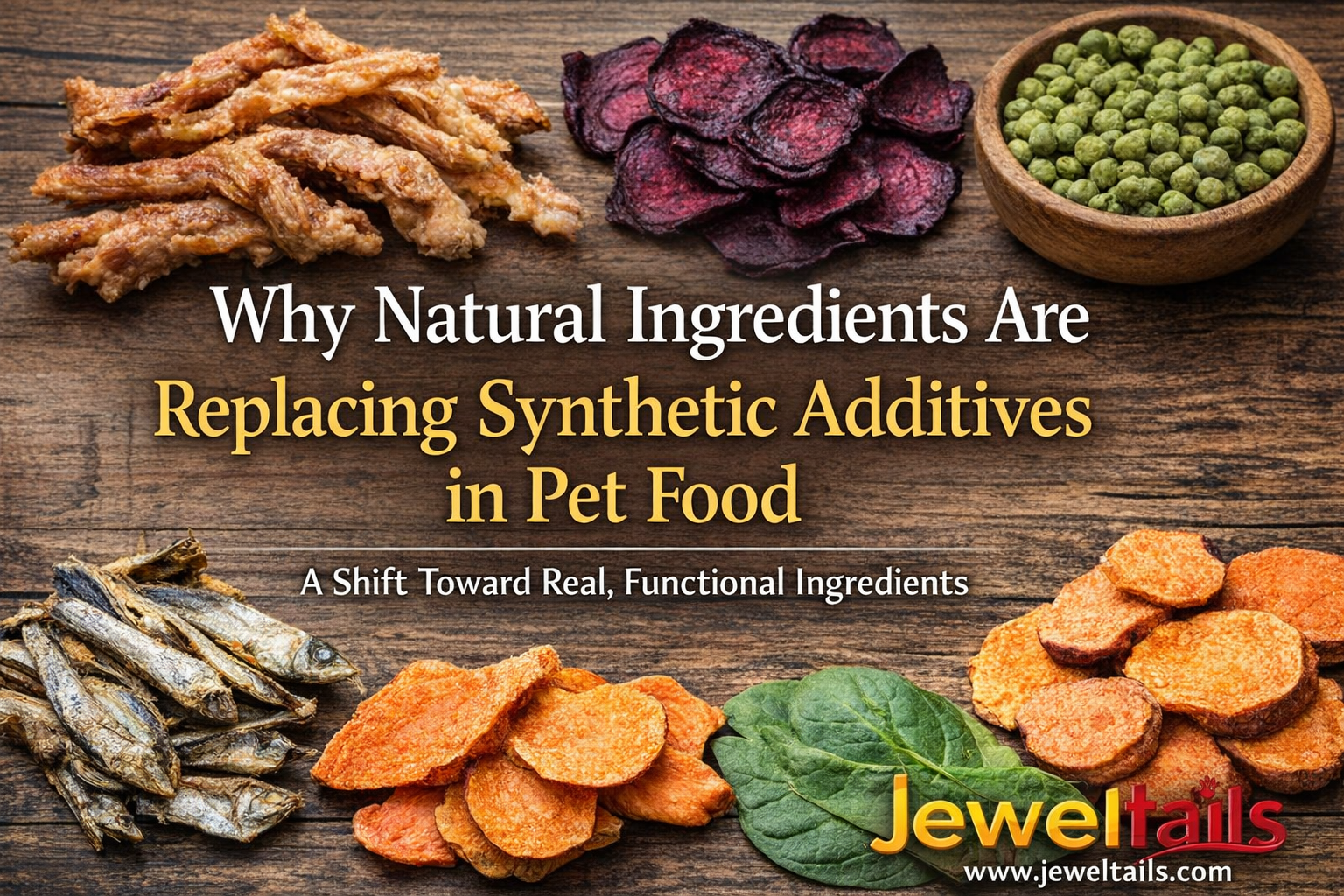
- Chicken necks can support joint health naturally
- Chicken feet for collagen and dental health
- Anchovies provide omega-3 without synthetic oils
- Beetroot offers antioxidants and natural color
- Sweet potato supports digestion and energy
This approach simplifies formulations while improving perceived quality.
Where Dehydration Fits In
One of the key challenges with natural ingredients is shelf stability.
This is where dehydration becomes important.
Low-heat dehydration helps:
- Reduce moisture and improve shelf life
- Retain natural nutrients
- Maintain ingredient integrity
- Avoid the need for heavy processing
It allows real ingredients to be used in a more stable and practical format.
A More Practical Way to Build Better Products
For manufacturers, this shift does not mean completely changing formulations overnight.
It often begins with small steps:
- Introducing single-ingredient components
- Reducing dependency on synthetic inputs
- Using natural sources for functional benefits
- Improving overall ingredient quality
These changes can improve both product perception and long-term brand trust.
The Direction the Industry Is Moving Toward
The pet food industry is gradually moving toward:
- Simpler formulations
- Real ingredient inclusion
- Better balance between nutrition and processing
- Products that are easier to understand and trust
This is not a short-term trend. It is a gradual shift in how pet nutrition is approached.
Connect With Us
If you are exploring natural ingredient-based formulations or looking for dehydrated single-ingredient inputs, we are open to collaboration.
For partnership inquiries and bulk supply discussions:
https://www.jeweltails.com/contact-us/