
A Veterinary Perspective with Dr. Anirudh Mittal, Pupkitt Pet Care
(In collaboration with Jeweltails)
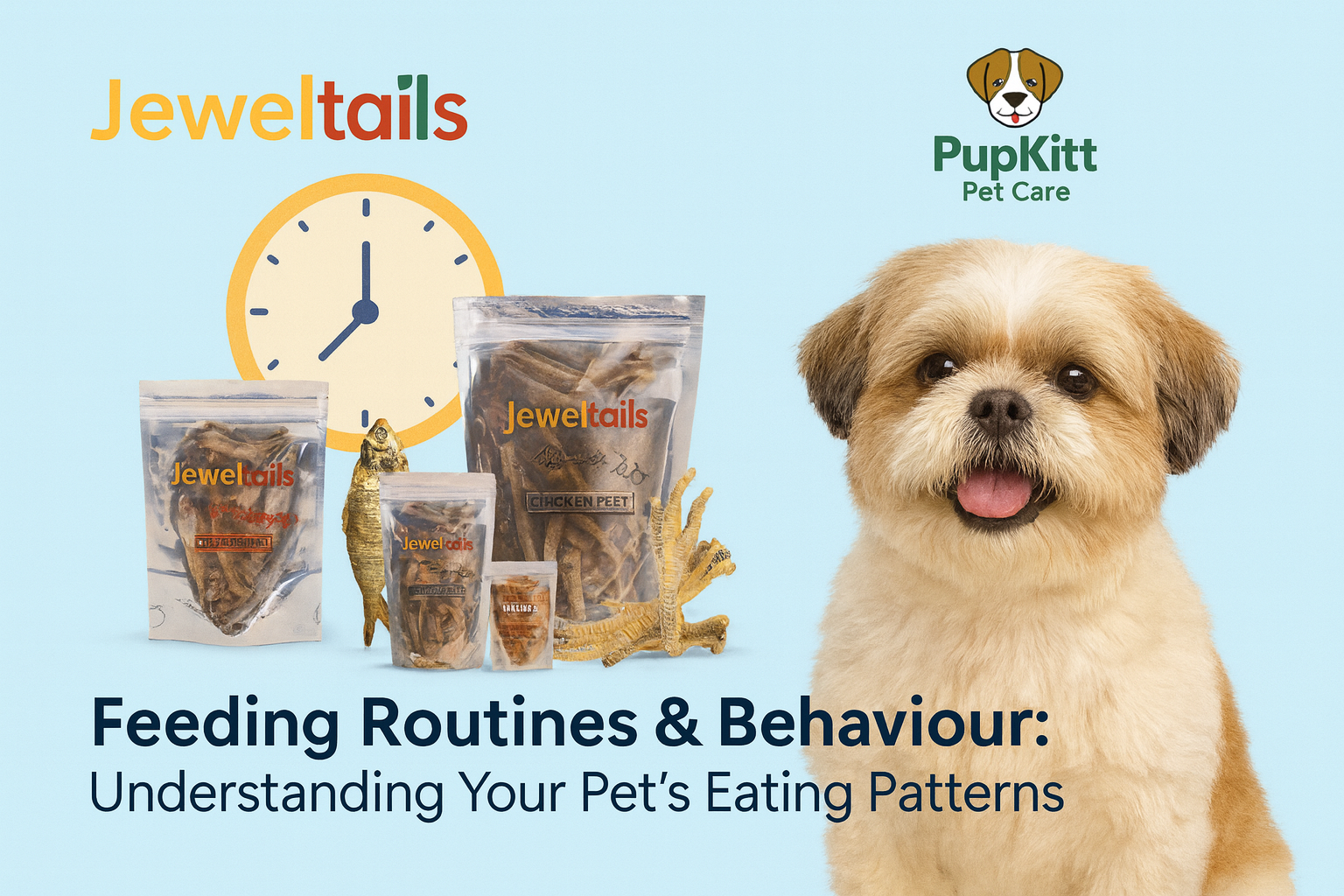
Ever notice how your dog perks up at the same time every evening? Or how your cat does a little “mealtime dance” just as you’re winding down? Our pets might not wear watches, but their bodies and hearts run on routine—especially at mealtime.
This part of our series dives deep into how feeding routines help pets feel safe, balanced, and healthy. Let’s look at why good habits make all the difference, what real-life pet behaviour tells us, and how you can set your furry family member up for mealtime success.
Why Mealtime Routines Matter
-
Pets, just like us, feel their best with a predictable rhythm. Serving meals at the same times every day helps your pet relax, improves digestion, and even makes training easier.
-
Whether you have a puppy learning the ropes or a wise senior, having “food o’clock” gives their day structure—and lets them know you’re tuned in to their needs.
-
Think of routines as unspoken love language: you block out time for your pet, and they respond with tail wags and content purrs.
What “Healthy Eating Behaviour” Looks Like
-
Serve food in a quiet “safe zone”—a spot your pet knows is theirs, where no one will sneak their kibble or interrupt dinner.
-
Portions aren’t just numbers on a bag. Actively measure food to keep your pet healthy (and their waistline in check).
-
Slow feeders, puzzle bowls, or scattering food for sniffing can turn eating into an enriching activity—great for fast eaters or clever, curious pets.
-
Watch how your pet eats: finishing every last drop with gusto, or leaving half untouched? Changes can mean something’s up—emotionally or physically.
Spotting and Solving Feeding Struggles
-
Is your pet suddenly picky or guarding their bowl? Any change that lasts more than a day or two is worth noting.
-
Don’t just chalk up fussiness to “picky eating.” Sometimes, eating troubles are early hints of stress, dental discomfort, or even feeling down.
-
Talk to your vet if you spot patterns or if mealtimes become stressful. Sometimes a small tweak to the environment or feeding routine can make all the difference.
Keep Routines Age-Appropriate and Flexible
-
Puppies and kittens might need meals more often; seniors may prefer smaller, more frequent portions.
-
Life changes are tough—for pets, too! If you travel, change schedule, or something big shifts at home, adjust routines gradually so your pet can adapt.
-
Pair meals with gentle routines (like a walk or a cuddle) to add even more reassurance.
The Jeweltails Promise
At Jeweltails, we know feeding your pet is more than a daily chore—it’s a shared moment that builds trust, joy, and good health. That’s why our treats and foods are simple, safe, and as real as your bond with your pet.
This blog is Part 3 of our ongoing Pet Nutrition Series in partnership with Pupkitt Pet Care.
Catch up on previous blogs here:
Next in Our Blog Series
We’re just getting started! In the coming weeks:
-
We’ll dive into superfoods for your pet—practical, tasty ways to boost long-term health from the inside out.
-
And then, we’ll help you choose the perfect nutrition for puppies, adults, and seniors—making sure every stage is fueled with confidence.
Stay tuned—your pet’s happiest, healthiest years are just a meal away!